

Sympathy Sy sym·pa·thy /ˈsimpəTHē/ noun
- feelings of pity and sorrow for someone else’s misfortune.
“they had great sympathy for the flood victims”
the formal expression of pity or sorrow for someone else’s misfortune; condolences.
plural noun: sympathies; plural noun: one’s sympathies
“all Tony’s friends joined in sending their sympathies to his widow Jean”
- understanding between people; common feeling.
“the special sympathy between the two boys was obvious to all”
- support in the form of shared feelings or opinions.
- agreement with or approval of an opinion or aim; a favorable attitude.
- relating harmoniously to something else; in keeping.
- the state or fact of responding in a way similar or corresponding to an action elsewhere.
empathy noun em· pa· thy | \ˈem-pə-thē \
- the action of understanding, being aware of, being sensitive to, and vicariously experiencing the feelings, thoughts, and experience of another of either the past or present without having the feelings, thoughts, and experience fully communicated in an objectively explicit manner
- the imaginative projection of a subjective state into an object so that the object appears to be infused with it
A few weeks ago, I explored the concept of Compassion. In it, I mentioned how compassion in neither “sympathy or empathy but the composite of both.” This isn’t the first abstract emotion(s) that have been explored and they won’t be the last. We covered “mystified” a few ago as well. Hopefully, by the end of that series, my argument for it as an emotion was made even more clear. If nothing else the importance both sympathy and empathy play in our emotional states is a worthwhile pursuit in understanding.
Many use “sympathy” and “empathy” interchangeably though they differ greatly. This is likely due to the fact that prior to the end of the 19th century there wasn’t truly a word for empathy, so sympathy had historically been used to try and describe the concept for the two. Psychologist E.B. Titchener came along and translated the German concept of Einfühlung, which was famously coined by German philosopher Robert Vischer who was known for his “empathy theory.”
Sympathy is not necessarily about feeling what the other person is feeling, but in responding with an appropriate compliment to their feelings. In some instances, it is important to mirror that person’s emotions, and in these cases, it is indistinguishable from empathy. It is important to remember that the two are important in the ways that we respond to others just as much as they are in relation to how we respond to ourselves.

12-13-18 Head Rolls Off by Frightened Rabbit
12-13-18 “While I’m alive, I’ll make tiny changes to earth,” Frightened Rabbit frontman Scott Hutchison sang in Heads Roll Off on the Scottish band’s 2007 debut album. Hutchison, who passed away at age 36 earlier this year, is widely considered to have been one of the...
12-12-18 Taro by Alt J (Δ)
12-12-18 This song, from the very beginning it always caught me, something fierce. When An Awesome Wave came out in 2012, surprisingly I hadn’t heard it despite the critical acclaim and almost cult-like following they had been garnering. It wasn’t until about...
12-11-18 Brother’s Keeper by India.Arie
12-11-18 “I don't believe an accident of birth makes people sisters or brothers. It makes them siblings, gives them mutuality of parentage. Sisterhood and brotherhood is a condition people have to work at.” Maya Angelou I have been fortunate in life to have an amazing...

12-10-18 Soldier On by Temper Trap
12-10-18 The emotional well that holds sympathy and empathy can at times dry up. The words and actions that we choose to use can come off as less than caring, and ultimately cause more harm than good. Expressions of resilience can be interpreted as passive-aggressive...
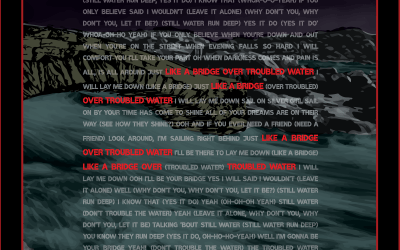
12-9-18 Like A Bridge Over Trouble Water by Aretha Franklin
12-9-18 A song made famous by Simon and Garfunkel in 1970, it has been used countless times over, as an offer of support and sympathy. I may be burned at the stake for saying this, but I have never been overly fond of Simon and Garfunkel, as a pair, and in their solo...

12-8-18 Orange Sky by Alexi Murdoch
Date 12-8-18 When I was 18 years old my Tio Nick passed away. I never had a real opportunity to get to know him, most my family says that’s for the best. The moments that I do remember, I remember a wandering spirit; to a young child, this seemed almost appealing. I...
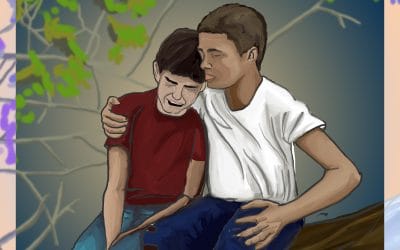
12-7-18 I’ll Stand By You by The Pretenders
12-7-18 Being present is one the most important things we can do. This isn’t precluded to moments of intense focus, or only in serious moments, but in every moment that we can be. When we can do this for another person, we can offer them something that we all require,...
Explore Past Emotions


