


Love | /ləv/ |noun
- an intense feeling of deep affection.
- a great interest and pleasure in something.
verb
- feel a deep romantic or sexual attachment to (someone)
“Love is an act of endless forgiveness, a tender look which becomes a habit.” – Peter Ustinov
Throughout this project, I have begun to broaden my understanding of the differences between emotions and feelings. Behavioral scientists tend to classify an emotion as something that can be read through facial expressions and cues, and due to this, it limits the number of emotions that can be organized, by many. The face can execute only so many different movements, and through study and research, there hasn’t been much evidence to indicate a distinct facial cue for love. As such it isn’t classified as an emotion.
This new approach to love is drastically different than what many of us may have been taught. William James, an American philosopher, was one of the early explorers of modern emotional intelligence and he proposed four basic emotions: fear, grief, love, and rage. Love was there at the beginning. Later individuals like Robert Plutchik would come along and discount love’s central role entirely. In fact, Plutchik categorized love as “dyad” or a combination of emotions (joy + trust =love.) This places love outside the primary scope and in a more abstract area.
So why is it on this list? Well as I stated from the very beginning this project is primarily based off of Robert Plutchik’s color wheel, and the work that he did in classifying and organizing emotions and emotional responses. Love as a dyad still suggests it has a significant stronghold over our collective dispositions, and as such it should most certainly be explored. Love is exciting because it is an emotion, for lack of a better phrasing, we created to place importance and empower our lives. It’s often attributed with favorable characteristics, but its power and hold can drive almost anyone to rage, anger, sadness, remorse, and much more.

02-14-19 The Book of Love by Magnetic Fields
02-14-19 Love is the joy of the good, the wonder of the wise, the amazement of the Gods. – Plato Unquestionably the most recognized song from The Magnetic Field’s 69 Love Songs Collection, The Book of Love is featured on the first volume of the collection. It’s...

02-13-19 Meet Me Where You’re Going by Cloud Cult
02-13-19 "Being deeply loved by someone gives you strength while loving someone deeply gives you courage." - Lao Tzu I had wanted to ask my wife to marry pretty quickly after becoming involved with her. Fortunately, it was recommended I take it slow so as not to scare...

02-12-19 Our House by Crosby, Stills and Nash
02-12-19 "When the one man loves the one woman and the one woman loves the one man, the very angels desert heaven and come and sit in the house and sing for joy." - Brahma Sutra I say that I just “ended up” living with my wife, which is somewhat true, there wasn’t...
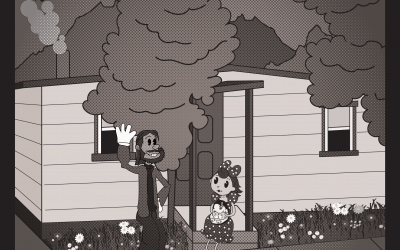
02-11-19 By Your Side by CocoRosie
02-11-12 "You come to love not by finding the perfect person, but by seeing an imperfect person perfectly." - Sam Keen This song and its aesthetic has always held a particularly macabre sense with it. The subtle Disney-esque references via the bird chirps throughout...

02-10-19 Sea of Love by Cat Power
02-10-19 "Age does not protect you from love, but love to some extent love protects you from age." - Jeanne Moreau Coming off her fourth album, Chan Marshall, a.k.a. Cat Power, found herself at a precarious position. Her success had brought the trouble of having to...

02-09-19 La La Love You by Pixies
02-09-19 The Pixies’ La La Love You, was intended to be a bit of a palette filler on the album Dolittle. Though its creation may have been birthed out of a sense of irony and satire, it has grown on to become one of the most “romantic” ballads of the Pixies catalog....

02-08-19 Fade Into You by Mazzy Star
02-08-19 Mazzy Star’s Fade Into You has been on most every “love” compilation since its release nearly 25 years ago. It manages to capture the yearning for another person in such an idyllic way, the border between hopeful and the pain of love not fully requited....
Explore Past Emotions


