

12-12-18
This song, from the very beginning it always caught me, something fierce. When An Awesome Wave came out in 2012, surprisingly I hadn’t heard it despite the critical acclaim and almost cult-like following they had been garnering. It wasn’t until about 2013-2014 that I actually had the privilege to listen to this album and everything else they had made in the interim. I WAS HOOKED. I immediately became an Alt-J (∆) fanboy. They were the first band in a long while to capitivate me so sincerely both through their music, and their lyrics.
On an album filled with mini-biographies and snapshots of prominent fictional characters, Taro, stands as one of the strongest in my opinion. If you were listening it by going through the album it’s transition from the sound before it, brings this momentary release of tension that has been building. You’re lulled into a state of comfort—then bit by bit the weight of the lyrics starts to slowly slip through.
There is a lot wrapped up in Taro –sorrowful post-rock melodies, soft bells mixed with obscure harmonics, some Indian-pop throughout the bridge, and a history lesson to boot.
The namesake of the song, Gerta Pohorylle—known professionally as Gerda Taro—was a German-Jewish war photographer. She was a prominent photographer during the Spanish Civil War. Her work took her to the frontlines of many conflicts, one of which would take her life and make her the first known female photojournalist to die while covering the frontline.
Taro was the companion and professional partner of photographer Endre Friedmann, who was more commonly known as Robert Capa. The name “Robert Capa” was originally an alias that Taro and Friedmann shared. This alias allowed Taro and Friedmann to show their work to a broader audience, particularly the United State. The increasing intolerance throughout Europe made it difficult for two self-taught photographers with Jewish heritage, this alias gave them a more amenable presentation. Much of the work accredited to Robert Capa’s early career has been identified as belonging to Taro. The two together helped form an identity that has gone on to be regarded by some as the greatest combat and adventure photographer in history.
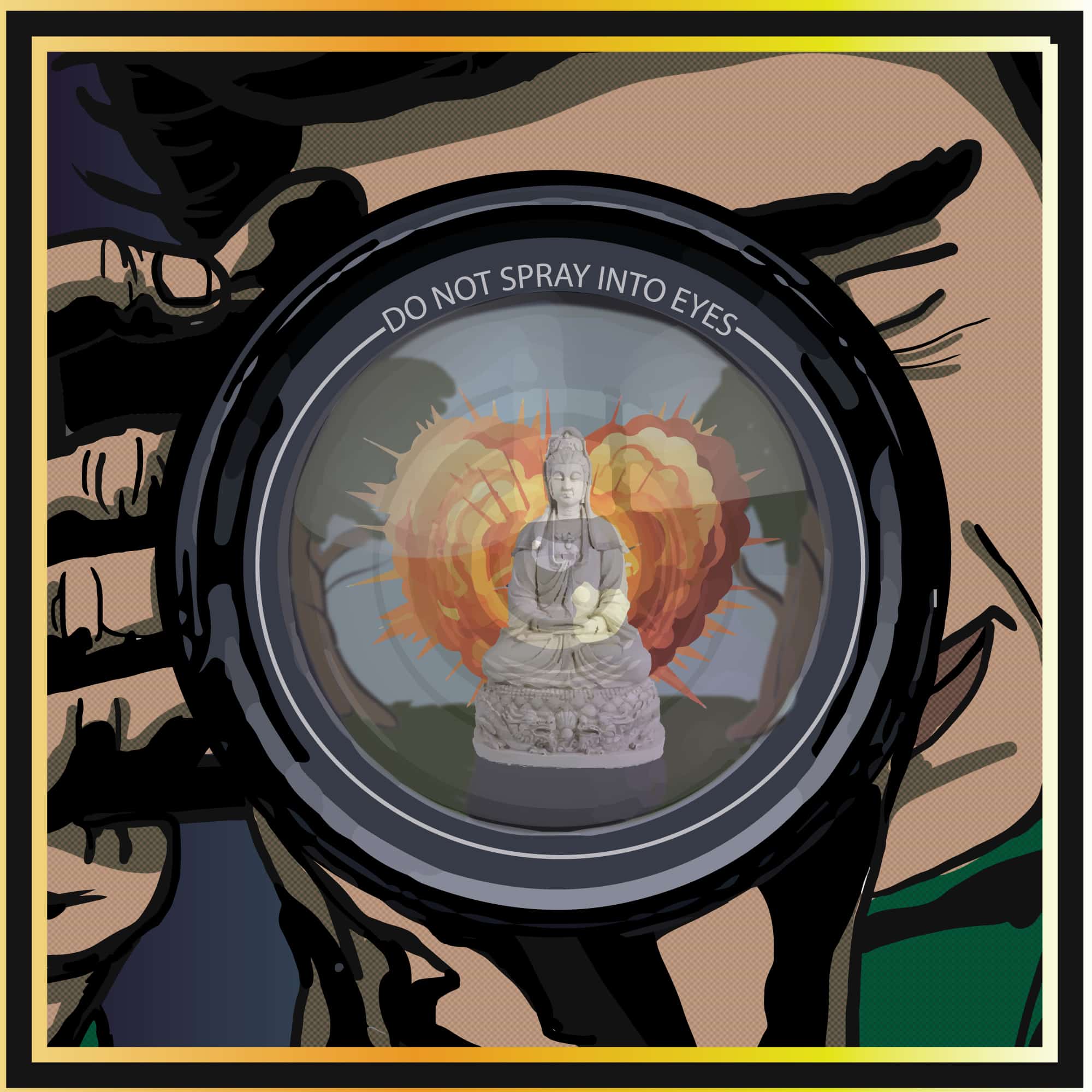
The song moves in and out of Taro’s companion, Robert Capa’s, point of view; detailing his final moments in life and ultimately how he is returned to Taro. During the first Indochina War Capa was asked by a prominent magazine to take photos of the war, despite having retired from wartime photojournalism. Early into his expedition he stepped out of the safety of his company vehicle and came across a landmine, which is ultimately how he was killed, dying with his camera in his hand.
To create anything based from this story shows an understanding of sympathy. The songs existence in and of itself works to propel this concept, and when you look at the lyrics, and how the story is told there is such a profound poetic prose which is enlisted in order to convey something that really no one could fully empathize with. This is where the appeal to sympathy comes into play. We of course, as the audience do not know what was in Endre Friedmann’s mind the moment he was killed, we can only speculate, and the point of the song isn’t for it to be rooted fully in some biographical retelling. The intent, at least in my understanding, is to convey the power of acceptance, and sympathy.
Lyrics:
Indo-china, Capa jumps Jeep, two feet creep up the road
To photo, to record, meat lumps and war
They advance as does his chance, oh, oh
Very yellow white flash!
A violent wrench grips mass, rips light, tears limbs like rags
Burst so high finally Capa lands
Mine is a watery pit
Painless with immense distance
From medic from colleague, friend, enemy, foe, him five yards from his leg
From you Taro
Oh, oh, oh
Do not spray into eyes
I have sprayed you into my eyes
Three ten
Pm Capa pends death, quivers, last rattles, last chokes
All colors and cares glaze to grey
Shriveled and stricken to dots
The left hand grasps what the body grasps not oh, oh
Le photographie est mort
Three point one four one five, alive no longer my amour
Faded for home May of ‘54
Doors open like arms, my love
Painless with a great closeness
To Capa, to Capa Capa dark after nothing, re-united with his leg
And with you Taro, oh, oh, oh
Taro, oh, oh, oh
Do not spray into eyes
I have sprayed you into my eyes
Hey Taro!